News
THE GLOBAL WELLNESS ECONOMY IN AUSTRALIA
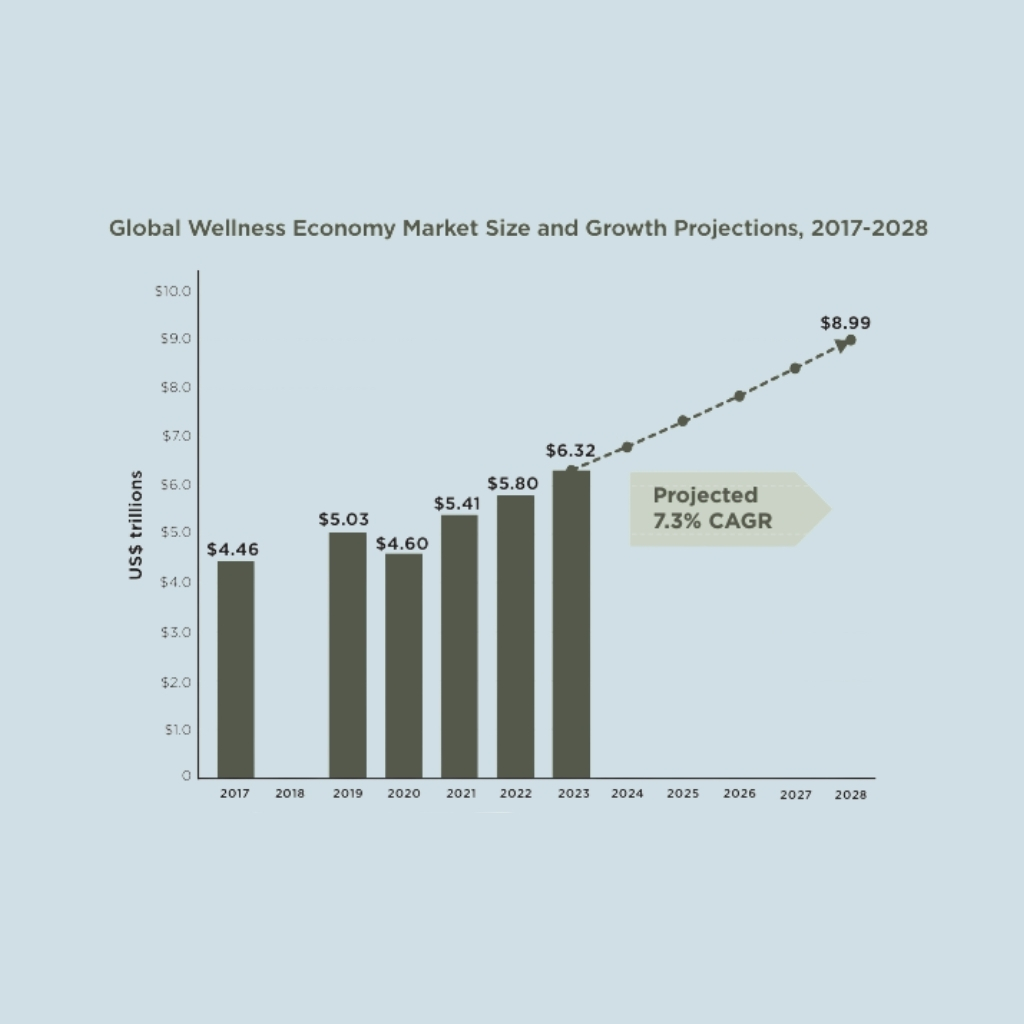
The global wellness economy has grown rapidly in the aftermath of the pandemic and reached a new peak of $6.3 trillion in 2023. While the global wellness economy was initially hit hard by the pandemic in 2020, it has rebounded quickly, fueled by the ever-expanding consumer interest in and need for wellness – which has only accelerated in the wake of COVID-19.
In 2023, the global wellness economy stands at $6.3 trillion dollars, over 25% higher than its size in 2019. After an 8.5% downturn in 2020, the wellness economy grew robustly by 17.5% in 2021 in its initial phase of recovery from the pandemic, and then growth tapered off to 7.2% in 2022 and 9.0% in 2023. Looking at its overall trend since before the pandemic, the global wellness economy has been increasing at an average annual rate of 5.9% from 2019-2023, a growth trend that is significantly faster than the global GDP growth rate of 4.6%.¹
We project that the global wellness economy will grow at a robust rate of 7.3% annually from 2023-2028, a growth rate substantially higher than the projected global GDP growth (4.8% according to current IMF forecasts). As all of the eleven sectors recover from the pandemic, the wellness economy is expected to reach nearly $6.8 trillion in 2024, and march toward nearly $9.0 trillion in 2028.
Source: Global Wellness Institute
TREND: THERMAL BATHING IS HOT (AND COLD)
Post pandemic, consumers are amping to explore new forms of sweat bathing and reap the benefits of hot/cold contrast therapy. In our 2022 trend, Urban Bathhouses and Wellness Playgrounds, we explored the revival of communal hydrothermal bathing, an age-old, traditional wellness experience that is being embraced the world over.
By Cassandra Cavanah
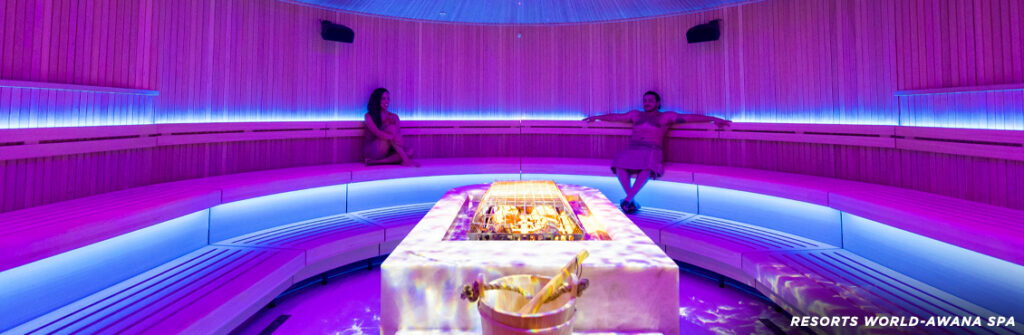
There’s a plethora of amazing, often ritualistic, ways to cleanse and purify the body through sweat bathing, water and cold temperatures—and today people seem to want to discover them all. We’ve witnessed an amazing amount of growth and exploration in hydrothermal bathing in recent years—from Finnish saunas and Russian banyas to Turkish Hammams and Korean bath houses to mud bathing and thalassotherapy to Japanese onsens and Mayan temazcals, and so much more.
It’s easy to understand the increased appeal and popularity of hydrothermal bathing in this moment in history. First, there’s a growing body of evidence that hydrothermal bathing is something post-pandemic wellness consumers want more of. Medical studies suggest that different hydrothermal therapies can protect against respiratory and cardiovascular disease; improve immune system function, muscle recovery, and sleep; and help with chronic pain. Second, it’s a self-administered, touchless wellness experience, which means it’s great for those who are not yet ready for a hands-on treatment. Third, when done right, hydrothermal bathing is a communal, soul-rejoicing experience—something we all need a bit more of right now!
“In the post-COVID landscape, we’re seeing an amazing amount of creativity—whether it’s new floating saunas, new roadside saunas serving cold water swimmers and surfers or new cold rooms with real snowfall, there’s no end to the imaginative ways hot/cold contrast therapy is being celebrated all around the world,” said Don Genders, chair of the Global Wellness Institute’s Hydrothermal Initiative.
This Trendium is based on Urban Bathhouses & Wellness Playgrounds, trend from the 2022 Global Wellness Trends Report.